


High‑Efficient Paddy Separator
Durable Rice Mill Separator
Goldilocks MGCZ gravity paddy separator works as core processing equipment inside rice milling workflows. Its balanced sieve frame ensures smooth vibration without heavy foundation load. Flexible angle adjustment adapts to diverse paddy varieties and moisture levels. Simple access supports routine cleaning and inspection without complex tools. Both single‑body and double‑body models cover capacity from 0.6‑3.5 ton per hour. It helps raise whole‑rice yield and lower grain waste for grain processors. Compact footprint saves floor space for retrofitted old milling workshops.
Featured Products
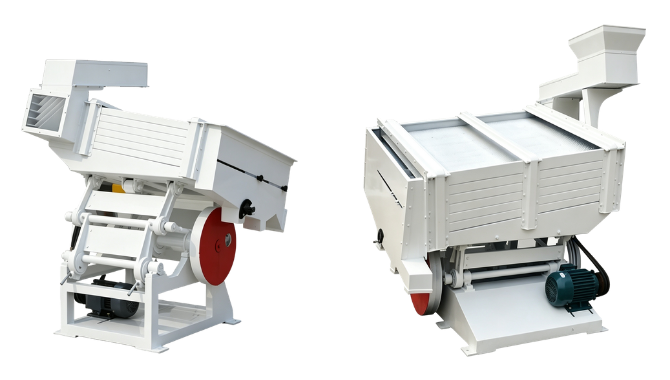
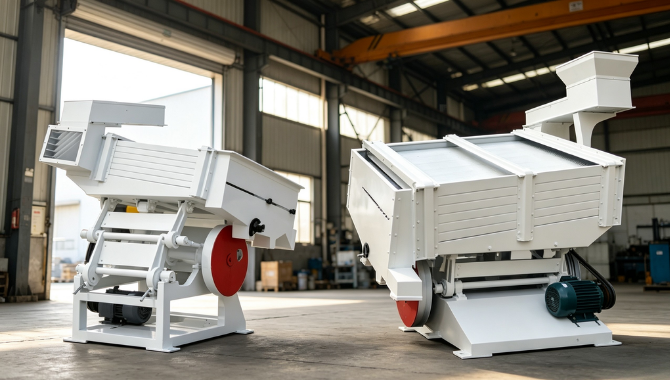
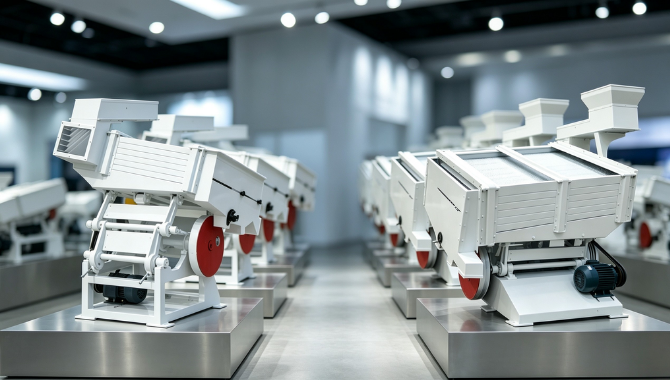
MGCZ series gravity paddy separator is core equipment applied between husking and whitening processes in rice mills. It separates paddy and brown rice relying on gravity difference, reciprocating sieve motion and air flow. This machine has strong adaptability to mixed raw materials. There are ten standard models covering capacity from 0.6 t/h to 4.5 t/h, suitable for small and medium rice processing plants.

Its power ranges from 0.75 kW to 2.2 kW, and the net weight varies between 200 kg and 1010 kg. The separation performance is stable with high finished product purity. Simple operation and low maintenance cost help rice factories boost output and reduce broken rice rate. It is widely matched with complete rice milling lines for paddy separation.
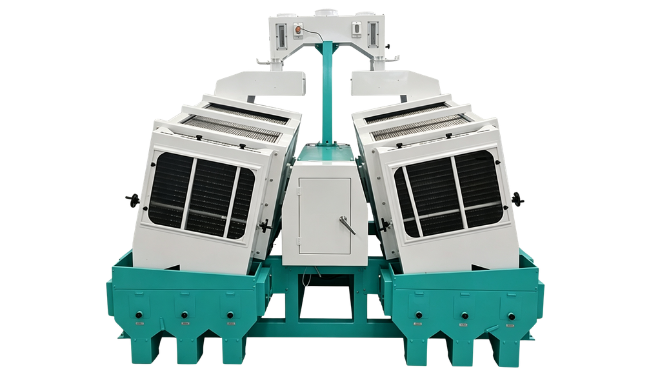
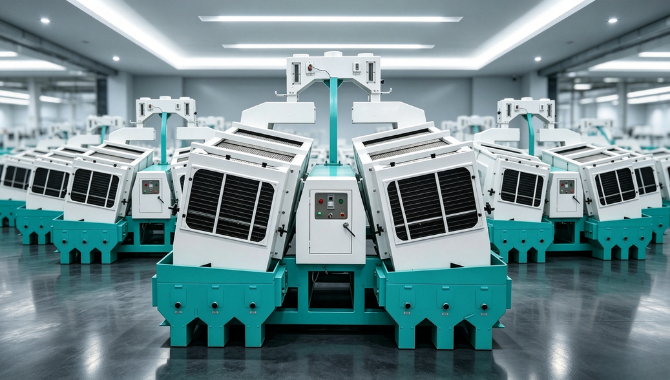
MGCZ dual-body paddy separator adopts dual sieve body balanced structure, which greatly reduces vibration during operation. It is equipped with durable stainless separation plates and automatic material level control system to realize automatic start and stop. Three available models can deliver brown rice output from 5.5 t/h to 11.3 t/h, designed for medium and large rice processing projects.

The machine power ranges from 2.2 kW to 5.5 kW. It can be matched with 50–200 tons per day complete rice milling lines. Higher separation efficiency and stable running performance effectively distinguish unhusked paddy from brown rice. It helps improve rice quality and brings stable economic benefits for large rice mills.
Working Principle of Goldilocks MGCZ Gravity Paddy Separator
Goldilocks MGCZ gravity paddy separator separates paddy‑brown‑rice mixtures by differences in specific gravity and friction coefficient. Under reciprocating sieve movement, brown‑rice kernels climb upward along sieve plates while lighter unhusked paddy slides downwards. Three material streams are generated: pure brown rice for whitening, mixed grain for circulation re‑separation, and raw paddy returning to rice husker. Single‑body models cover capacity 0.6‑2.5 t/h and double‑body versions reach up to 3.5 t/h. Stainless‑steel sieve plates resist grain abrasion during continuous shifts. Spring‑buffered support lowers vibration transfer toward building foundation. Operators adjust sieve inclination angle according to paddy moisture and grain variety. It fits standalone installation or inline connection with bucket elevators and huskers inside rice‑milling workflow. This mechanical unit improves whole‑rice yield and cuts grain waste for grain‑processing workshops.
Key Structural Features of MGCZ Paddy Separator
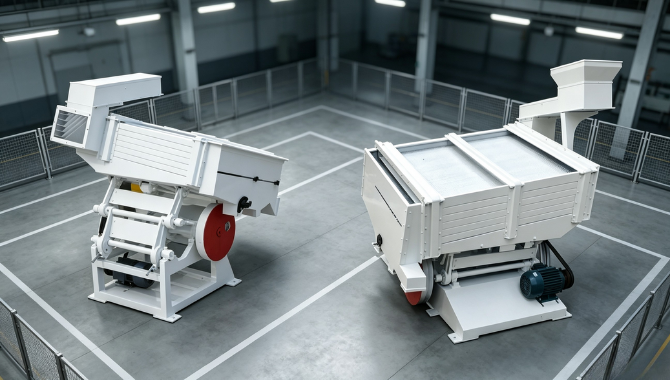
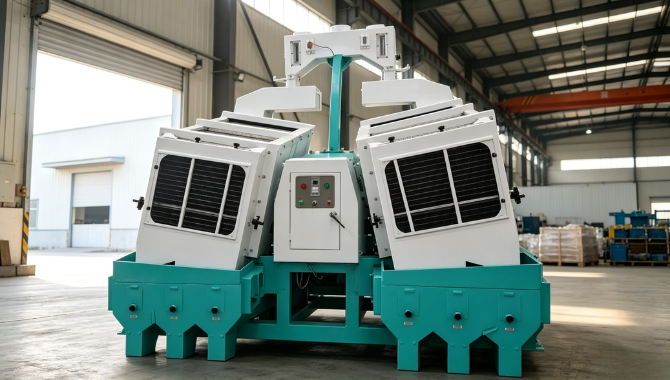
Goldilocks MGCZ gravity paddy separator adopts mature mechanical layout proven in numerous rice‑mill sites. Its sieve frame applies reinforced welded structure to sustain long‑time reciprocating vibration. Replaceable stainless‑steel sieve plates serve as core sorting components for paddy‑brown‑rice classification. Spring‑buffer assemblies absorb shock generated during high‑frequency reciprocating movement, mitigating vibration transmitted to workshop floor. Both single‑body and double‑body configurations are available.
Double‑body design equips two synchronized sieve assemblies for higher hourly throughput. Hand‑turn adjusting knobs allow fine tuning of sieve inclination without specialized tools. Observation openings enable operators to check real‑time separating performance without halting production. The machine connects with bucket elevators for material feeding and discharging. Stable mechanical performance lowers unexpected downtime for small‑and‑medium‑scale grain‑processing plants across global grain‑producing regions.
Daily Operation Tips for Gravity Paddy Separator
Goldilocks MGCZ gravity paddy separator requires standardized daily operation to sustain reliable separating performance. Before startup, operators inspect sieve‑plate fastening condition and spring‑buffer assembly status, making sure no foreign granular objects block material flow channel. Adjust sieve inclination angle moderately according to raw paddy moisture level; wet paddy usually needs modified angle setting compared against dry grain. Maintain even and stable feeding rate, preventing sudden material surge or intermittent starvation inside feeding hopper. During running period, observe three discharging outlets continuously, judge separating effect and fine‑tune knobs little‑by‑little instead of large‑range one‑time adjustment.
Do not perform maintenance work while machine keeps vibrating. Stop equipment regularly to clean accumulated fine dust and grain residues stuck on sieve‑plate surface. Timely replace worn sieve plates once sorting efficiency declines obviously. Keep motor and transmission parts well‑ventilated. Standard operation habits extend machine service life and keep stable grain‑sorting quality for rice‑milling workshops day‑by‑day.
Fault Phenomenon & Simple Troubleshooting for Paddy Separator
Gravity paddy separator may show abnormal symptoms if operation or maintenance falls out of standard requirements. Uneven material distribution across sieve surface often comes from unstable feeding flow or blockage inside feeding‑inlet passage. Poor separating effect with mixed‑grain cross‑contamination may result from improper inclination‑angle setup, seriously worn sieve plates or over‑loaded feeding volume. Abnormal vibration and loud noise usually relate to loose fasteners, fatigue‑damaged spring‑buffer components or foreign objects stuck among moving assemblies. Operators must cut off power supply before inspecting internal mechanical components. Re‑tighten loose bolts, replace aged springs and clean blocking residues step‑by‑step. Do not modify mechanical transmission structure arbitrarily without technical guidance. Keep spare sieve‑plate parts in stock for rapid replacement. Record common fault phenomena and corresponding solving steps for on‑site staff reference. Timely handling of minor anomalies prevents small issues developing into severe breakdowns which interrupt whole rice‑milling‑line production progress.
Difference Between Single‑body and Double‑body MGCZ Paddy Separator
Goldilocks supplies both single‑body and double‑body MGCZ gravity paddy separators for rice‑mill customers with varied throughput demands. Single‑body paddy separators adopt one set of sieve assembly, featuring compact dimension, light weight and lower investment cost. Its processing capacity ranges 0.6‑2.5 tons per hour, matching small‑scale rice‑milling workshops, mini complete rice lines and renovation projects of old small grain factories. Double‑body paddy separators are equipped with two groups of synchronized sieve assemblies. It delivers higher maximum throughput reaching 3.5 tons hourly. Dual‑sieve balanced structure keeps stable separating accuracy on both sorting sections. Double‑body units occupy larger floor space and need relatively higher initial purchase budget. They suit medium‑size continuous‑running rice‑milling plants with daily capacity 30‑60 tons. When selecting models, buyers need to consider actual hourly grain‑processing volume, available workshop area and overall project investment budget. Proper model choice balances processing performance, site condition and capital input for grain‑processing enterprises.
Comparative Overview:Gravity‑Type versus Vibrating‑Screen Paddy Separator
MGCZ Gravity‑Type Paddy Separator
- Sorting principle:Adopt gravity‑friction principle, use gravity and surface‑friction differences between paddy and brown rice.
- Working effect:Reciprocating inclined sieve outputs 3 kinds of materials: pure brown rice, mixed grain, un‑husked paddy.
- Advantages:Moderate power consumption, stable vibration, low spare‑part wear; good adaptability for various paddy raw materials.
- Application:Widely used in small & medium‑sized rice mills of emerging‑market countries, good cost‑performance.
Pure Vibrating‑Screen Classifier
- Sorting principle:Classify grains only by physical size difference of rice kernels.
- Working effect:Good performance when grain size gap is big; poor sorting result if paddy and brown‑rice sizes are close.
- Advantages & Disadvantages:Need higher motor power input; limited raw‑material adaptability.
- Suggestion:Buyers need to confirm raw grain features, hourly capacity and budget before selection.
More About Our Products
Gravity paddy separator plays a decisive role lifting whole‑rice yield inside complete rice‑milling technological flow. After rubber‑roller rice‑husker treatment, output material is mixed stream containing brown rice, un‑husked paddy and partial mixed grain. If this mixture directly flows into rice‑whitening machine, un‑husked hard paddy kernel will generate strong squeezing friction inside whitening chamber, producing large volume of broken rice. The paddy separator divides mixed material into three independent streams. Pure brown‑rice fraction enters rice mill without hard paddy impurity, which greatly lowers mechanical‑crushing risk for rice kernel. Un‑husked paddy gets sent back toward rice‑husker unit for secondary hulling. Mixed‑grain portion circulates back for repeated sorting treatment. This technological route prevents hard paddy grain staying inside whitening section. Higher whole‑rice proportion in final finished‑rice product brings better market value for grain processors. Stable separating performance of paddy separator creates pre‑condition for reducing broken‑rice generation in downstream milling procedures. Many real‑world rice‑mill cases verify that properly‑functioning gravity paddy separators deliver visible economic return for grain‑processing plants.
Goldilocks MGCZ gravity paddy separator needs regular wearing‑part replacement to sustain long‑time stable sorting capacity. Sieve‑plate assembly ranks as the most‑frequently‑consumed component. Made of anti‑abrasion stainless steel, sieve plates bear continuous grain scouring during every production shift. Grain‑particle friction gradually wears sorting grooves, which causes separating‑precision decline. Operators should inspect sieve‑plate condition on scheduled cycles and prepare spare sieve‑plate stock for timely swap‑out. Spring‑buffer components belong to important fatigue‑consuming parts. Long‑term reciprocating vibration leads to metal‑fatigue risk. Cracked or deformed buffer springs generate abnormal vibration and noise; aged springs must get replaced in time. Fastening bolts, lock nuts and vibration‑resistant gaskets also belong to routine‑inspection items. Loose connecting hardware will change overall dynamic balance status of sieve frame. Transmission‑side small components including bearing parts need periodic grease filling for lubrication. Users should adopt matching‑specification spare‑parts; non‑mismatched replacement accessories may worsen running status and damage other mechanical assemblies. Keep reasonable spare‑part inventory level according to actual annual production load of rice‑milling plant, so as to shorten equipment downtime when wearing‑parts reach service limit.
Technical Parameter
| Model | Capacity (t/h) | Power(kW) | Weight (kg) | Dimension (L×W×H mm) |
|---|---|---|---|---|
| MGCZ70×5 | 0.6~0.8 | 0.75 | 200 | 1100×1105×1300 |
| MGCZ70×6 | 0.8~1.0 | 0.75 | 220 | 1100×1105×1400 |
| MGCZ100×5 | 0.8~1.5 | 1.1 | 380 | 1650×1200×1270 |
| MGCZ100×6 | 1.0~1.8 | 1.1 | 400 | 1650×1200×1290 |
| MGCZ100×7 | 1.4~2.0 | 1.1 | 420 | 1650×1200×1310 |
| MGCZ100×8 | 1.8~2.2 | 1.1 | 440 | 1650×1200×1330 |
| MGCZ100×10 | 2.0~2.5 | 1.5 | 640 | 1760×1320×1620 |
| MGCZ100×12 | 2.5~3.0 | 1.5 | 670 | 1760×1320×1650 |
| MGCZ100×14 | 2.8~3.5 | 1.5 | 700 | 1820×1320×1680 |
| MGCZ100×16 | 4.0~4.5 | 2.2 | 1010 | 1830×1820×1700 |
| Model | MGCZ46X20X2 | MGCZ60X20X2 | MGCZ60X24X2 | |
|---|---|---|---|---|
| Capacity (T/H) | Pure Rice | 4.5-6 | 6.5-7.5 | 7-9 |
| Brown Rice | 5.5-7.5 | 8.2-9.4 | 9.38-11.3 | |
| Power (kW) | 2.2 | 3 | 5.5 | |
| Dimension (mm) | 1740×2140×2105 | 1840×2520×2195 | 2480×2100×2400 | |
| Weight (Kg) | 1150 | 1710 | 1910 |
 English
  Русский
  Español
  Français
  Português
  Tiếng Việt