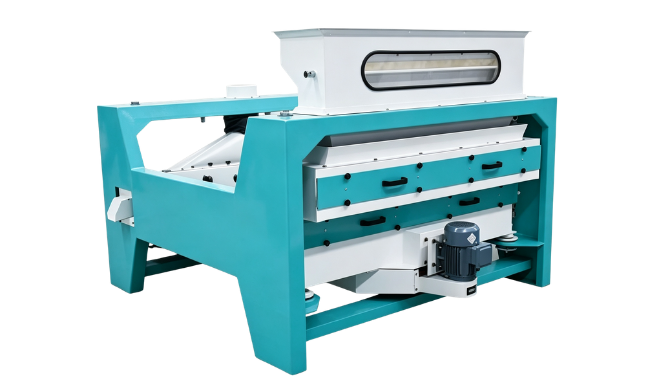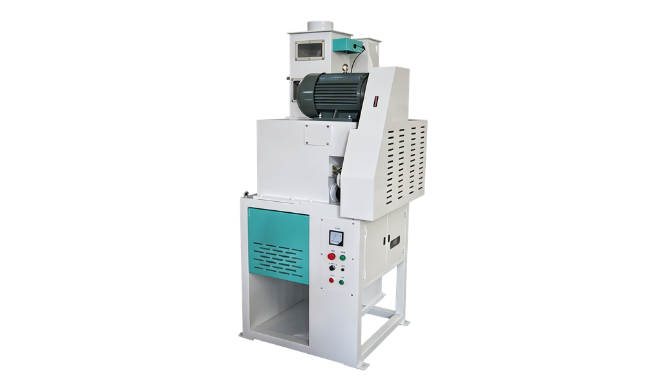


Grain Lifting That Adds No Breakage

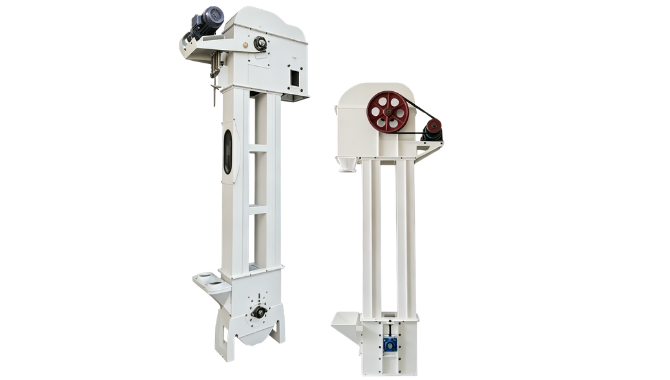
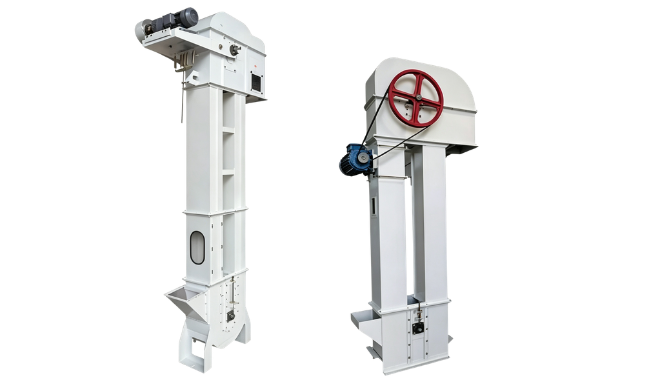
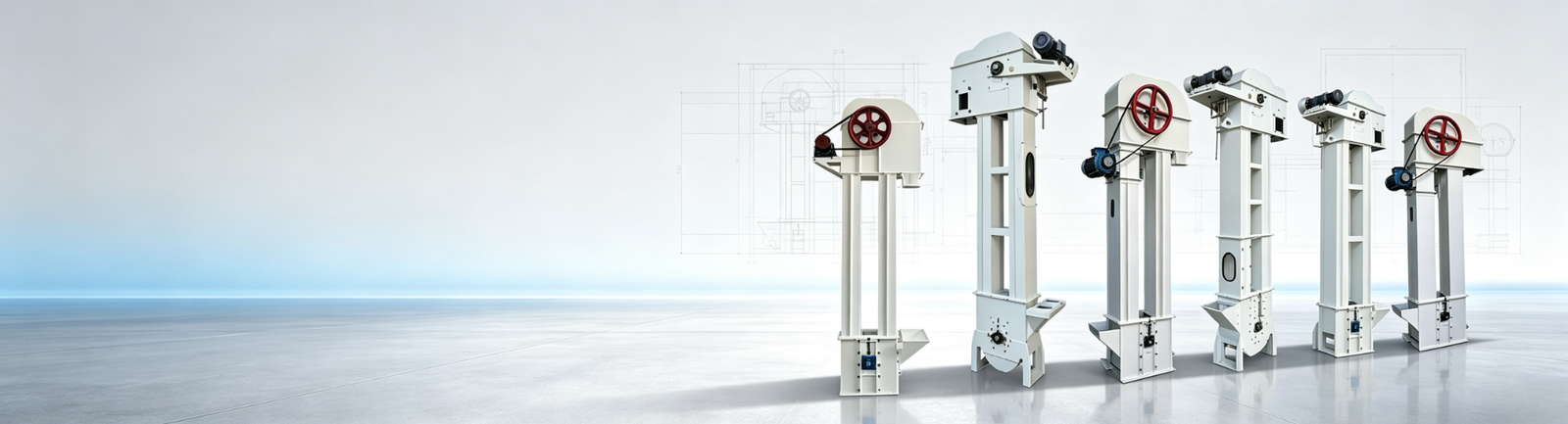
Every time grain moves through a mill, a little of it breaks. Elevators lift it highest and fastest, and that is where the breakage usually happens. Goldilocks TDTG series bucket elevators are built to change that. The bucket size, belt speed and head pulley are matched to the grain, so kernels are lifted gently and released cleanly with no crushing, no backflow and no pile-up at the discharge. Overload regulation is built in, the sealing keeps dust inside the leg, and the low noise lets the mill run comfortably. From the compact TDTG18/07 moving 0.8 to 1.5 tons an hour to the TDTG50/33 handling 60 to 80 tons, one factory builds every model. The same design logic applies at every scale: keep the grain whole, keep the mill clean, keep the power bill low. For millers, the saving shows up directly in the milling rate and in the grade of the finished rice. A Goldilocks elevator lifts more than grain; it protects the yield.

Bucket Elevators from 0.8 to 80 Tons per Hour

A mill’s elevator should fit the mill, not the other way around. Goldilocks builds the TDTG series across eleven models, from the TDTG18/07 at 0.8 to 1.5 tons per hour to the TDTG50/33 at 60 to 80 tons per hour, so the buyer picks the exact capacity the line needs. Between those ends sit the TDTG18/08, TDTG18/11, TDTG20/13, TDTG24/18, TDTG26/18, TDTG26/23, TDTG36/23, TDTG36/28 and TDTG40/28, covering 1.5 to 60 tons per hour without gaps. Each model is a standard product with standard buckets and belts, so it is priced predictably and serviced anywhere. The W series low speed elevators add gentle lifting from 2 to 30 tons per hour for the stages where breakage matters most. Because Goldilocks builds complete rice lines as well as elevators, the factory recommends the right model from real line experience, not from a brochure. Tell the factory your grain, your flow rate and your lift height, and the model number follows.

Введение продукта

W Series Low Speed Elevator
The W series low speed elevator is Goldilocks’ gentle lifting machine, built for materials that cannot take a fast lift. It uses a lower line speed for material lifting, which greatly reduces the impact on the material and significantly lowers the increase in breakage during the lifting process. The series covers seven standard models, from the W2 at 2 tons per hour to the W30 at 30 tons per hour, with the W4, W6, W10, W15 and W20 in between. Each model is listed with its capacity, hoist bucket, head pulley diameter and power, from 0.75 kilowatts on the W2 and W4 to 4 kilowatts on the W30.
The W series is the standard choice for brown rice, polished rice, parboiled rice, seed grain, malt and roasted nuts, and for the fragile stages of a complete rice line where the milling rate is at stake. It keeps the practical virtues of a working elevator: large conveying capacity for its speed, strong overload adjustment, low energy consumption, no crushing, no backflow, good sealing, low noise and a long service life. Built in the same factory as the TDTG series, it shares the same spare parts catalog, so a mill with both families keeps one parts list.
TDTG Series Bucket Elevator
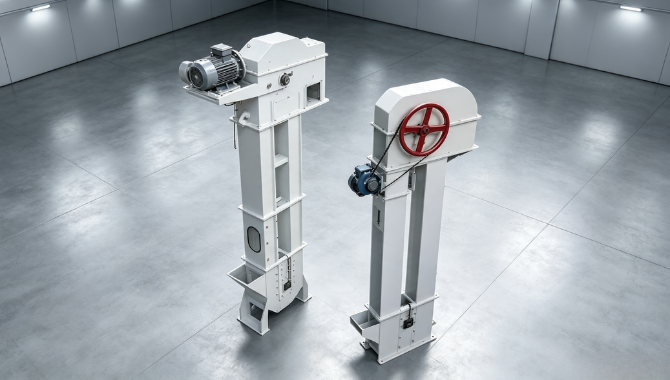
The TDTG series bucket elevator is Goldilocks’ standard vertical lifting machine for granular materials in grain and oil, food, feed and chemical industries. It is produced by introducing foreign advanced technology, with novel appearance, safe and reliable operation, small size and compact structure. The series covers eleven standard models, from the TDTG18/07 at 0.8 to 1.5 tons per hour to the TDTG50/33 at 60 to 80 tons per hour, with nine models in between. Each model is listed with its capacity, hoist bucket, belt width, head pulley diameter and power, from 0.75 kilowatts on the smallest to 7.5 to 11 kilowatts on the largest.
The elevator offers large conveying capacity, strong overload regulation, low energy consumption, no breakage, no backflow, good sealing, low noise and a long service life, making it an ideal vertical lifting machine for rice mills, flour mills, feed plants, oil seed plants and warehouses. On the CTNM complete lines it is matched to the machines around it, and its standard buckets and belts are ordered by model number from one catalog. The W series low speed elevators cover the fragile stages alongside it, from 2 to 30 tons per hour.

What a Bucket Elevator Does in a Grain Mill
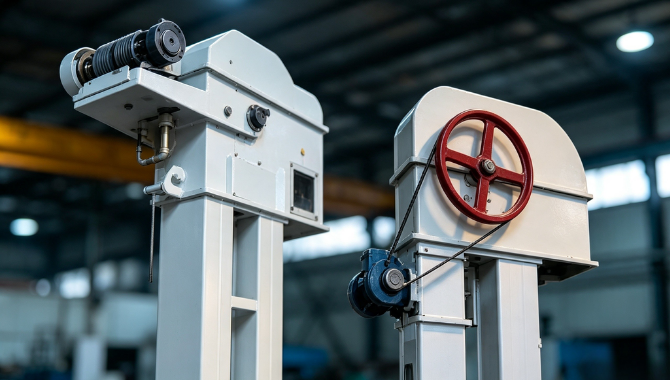
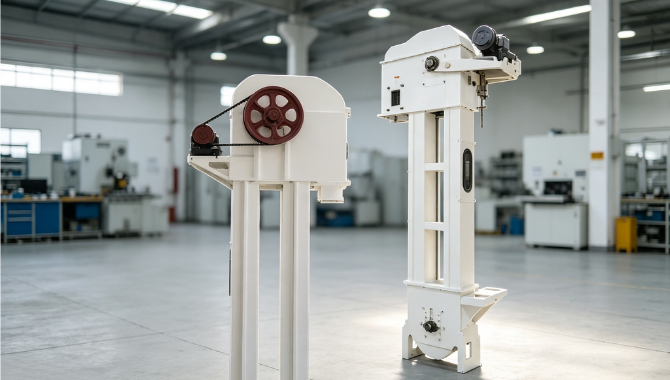
A bucket elevator is the machine that carries grain upward in a mill. A belt or chain moves a line of buckets that dip into the grain at the bottom, carry it to the top and tip it out into the next machine. Every rice mill needs this: paddy has to climb from the intake to the cleaner, brown rice rises between the husker and the separator, and white rice moves up to the grader and the packer.
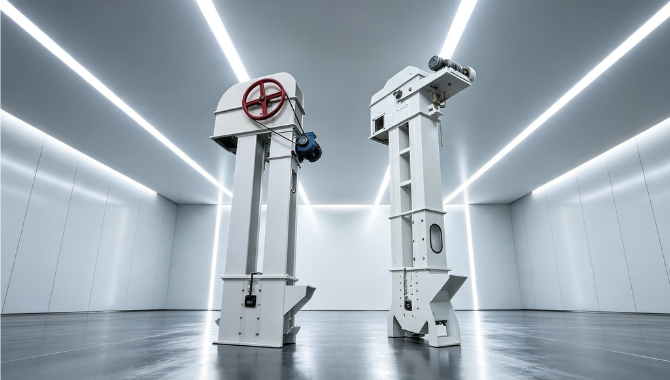
Goldilocks builds two families of bucket elevators. The TDTG series covers the normal range, from the TDTG18/07 at 0.8 to 1.5 tons per hour up to the TDTG50/33 at 60 to 80 tons per hour, with nine models between. The W series low speed elevators, from W2 to W30, run slower to protect fragile grain like brown rice. Both families share the same virtues: low energy use, no breakage, good sealing, low noise and a long service life. In a word, a small elevator starves the machines, and a rough one breaks the grain. Goldilocks sizes the bucket and the speed to the job, so the grain arrives whole and on time.

Why Low-Breakage Lifting Protects Your Milling Rate

Grain breakage is invisible money leaving a mill. Every cracked kernel lowers the price of the finished product, because whole rice sells at one rate and broken rice at another. The elevator is a surprising source of that breakage. When a bucket elevator runs fast, the grain is thrown into the buckets, collides at the intake, and is dumped hard at the discharge; fragile kernels crack at each point.
Goldilocks attacks this on three fronts. First, the TDTG series uses bucket sizes, belt speeds and head pulley diameters matched to the grain, so the filling and discharge are controlled. Second, the W series low speed elevators run at a deliberately lower line speed, which greatly reduces the impact on the material and the increase in breakage. Third, the machines use no-crush, no-backflow construction, so the grain does not tumble back down the leg and get hit twice. The result shows up in the numbers: a lower broken rice rate, a better grade and a steadier milling rate through the season. For a mill that processes a thousand tons a year, even a one percent improvement in whole rice pays for the elevator many times over. That is why the elevator is not a utility; it is a yield machine.

W Series Low Speed Elevators for Fragile Grain
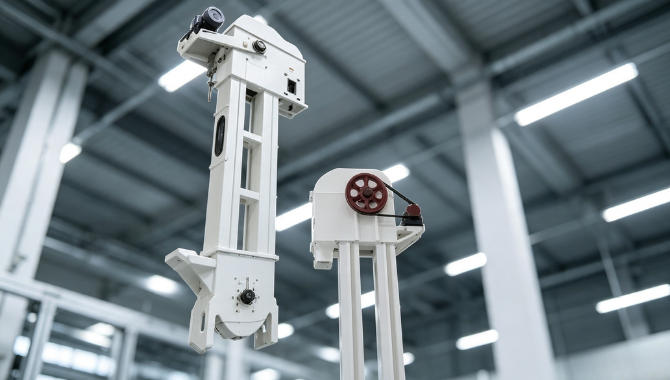
Some elevator jobs need speed and some need care, and the W series is built for the jobs that need care. Brown rice, polished rice, parboiled rice, seed grain, nuts and other fragile materials crack when they are lifted too fast, and the crack shows up as broken pieces in the finished product. The W series low speed elevator uses a lower line speed for material lifting, which greatly reduces the impact on the material and significantly lowers the increase in breakage during the lifting process.
The range covers seven models from the W2 at 2 tons per hour to the W30 at 30 tons per hour, with the W4, W6, W10, W15 and W20 in between, each with its own hoist bucket and head pulley diameter. Despite the gentle handling, the W series does not give up the practical virtues of a working elevator: large conveying capacity for its speed, strong overload adjustment, low energy consumption, no crushing, no backflow, good sealing, low noise and a long service life. Goldilocks builds the W series in the same factory as the TDTG series, so the spare parts, belts and buckets are standard items from one catalog. For the stages in a complete rice line where the milling rate is at stake, the W series is the standard choice. The W series also stays simple to run: the drive is matched to the gentle speed, and the manual covers the weekly checks in plain steps.

Sealed Elevator Legs Keep the Mill Clean and Safe

A rice mill without dust control is a building that slowly gets dirty, and dust is not only an appearance problem: airborne flour and bran dust can settle on machines, create fire risk and make working conditions uncomfortable. The elevator is usually the tallest and busiest machine in the mill, and it is also the easiest place for dust to escape, because the leg carries a moving belt, buckets and a large volume of grain. Goldilocks builds the TDTG and W series elevators with good sealing and no-backflow construction. The sealed leg keeps dust inside the casing, the discharge is arranged so grain cannot spill back down the leg, and the cover plates are simple to open for inspection and cleaning. The machines run with low noise, so the mill stays quieter as well as cleaner. Sealing also protects the product: outside dust, insects and moisture stay out of the grain path, which matters for rice that will be sold to strict buyers.
On a complete Goldilocks line, the elevators connect the machines without dust loss, and the mill owner can keep the floor clean with a simple daily sweep instead of a weekly deep clean. For buyers, sealed elevators are also a simple way to satisfy health and safety expectations in export markets. Good sealing also means the machine can run indoors without dust settling on the roof and the lights. The legs are shipped as standard sealed sections, so the sealing is consistent from the factory. Buyers can add a dust collection point at the head or the boot, which the drawings show clearly.

Bucket Elevator Maintenance: Standard Parts, Simple Checks

Bucket elevator moving parts inevitably wear, and the key difference between low-cost and premium units lies in serviceability. Goldilocks elevators are built around standardised components. Both TDTG and W series have clearly designated hoist buckets listed in technical tables: TDTG models adopt DS buckets (e.g. TDTG18/07 uses DS0706, TDTG50/33 uses DS3325), while W series uses DM buckets ranging from DM1109 for W2 to DM2921 for W30. Belts and buckets can be ordered directly by part number, allowing global mills to source exact replacements without sending samples.

Maintenance is straightforward. Operators weekly check belt tension, monitor bucket wear at the loading side, listen for rattles from loose bucket bolts, and inspect head pulley lagging seasonally. Access covers open without special tools, and manuals detail every procedure. The factory stocks spare buckets, belts and bolts for sea or air shipment.

For full Goldilocks processing lines, CTNM series elevators share the same catalog, consolidating parts lists. This standardisation lets units operate for decades with minimal spares and local technicians. Manuals guide users to decide bucket replacement vs repair, with transparent pricing for pre-season spare budgeting. CTNM line elevators use identical buckets and belts; double-shift mills only require more frequent wear checks, with unchanged spare parts.
Where Every Elevator Sits on a Complete Rice Line

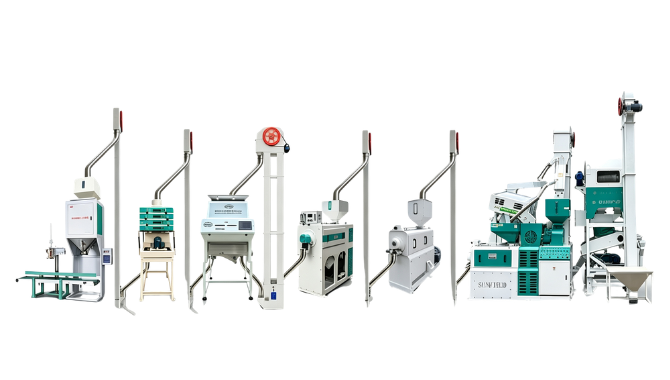
A complete rice line is a chain of machines, and the elevators are the links. Remove one link and the whole chain stops, which is why Goldilocks treats the elevator as a first-class component of every CTNM series line, not as an afterthought. On the CTNM20-25 line, the TDTG18/07 single elevators carry paddy from the intake to the combined milling machine and move rice between stages, and the fully equipped version adds a TDTG18/0707 double elevator where two flows must be handled side by side. On the CTNM30-40 line, TDTG18/11 single elevators handle the main flow, and W2 low speed units lift the stages where gentle handling protects the milling rate. On the CTNM50-60 line, TDTG24/18 elevators carry the larger volumes, with W4 low speed units for the fragile stages. The elevator models are chosen with the same care as the husker or the whitener, and the layout plan shows where each one stands, how high it lifts and where it discharges. Because the elevators and the machines are matched at the design stage, the line does not pile up between stages and does not starve at the packing end.


When a mill expands, the matching is easy: the new elevator follows the same model logic, bolts to the same supports and uses the same spare parts catalog. For the buyer, the practical meaning is simple: the elevator is not an extra to be sourced separately, but part of one quoted, one-factory system. The same matching logic applies when the line is quoted: the elevator models appear in the quotation next to the cleaner, the husker and the mill, so the buyer sees the conveying system in the price. During installation, the elevators go up with the machines, and the layout drawing shows the sequence. The factory’s experience with hundreds of lines means the elevator choice is not a calculation the buyer has to make alone; it comes with the line.

More Features for Products

The first job of a grain elevator is to move grain without damaging it, and Goldilocks builds the whole range around that job. The TDTG series uses bucket sizes, belt speeds and head pulley diameters matched to the grain, so the filling is gentle and the discharge is clean, with no crushing and no backflow down the leg. The W series low speed elevators go further, using a deliberately lower line speed that greatly reduces the impact on the material and significantly lowers the increase in breakage, which is why mills put them on brown rice, polished rice and other fragile stages.
The value of low breakage is easy to measure: whole rice sells at a higher price than broken rice, seed grain must stay whole to germinate, and roasted nuts must survive the lift to be sold by appearance. A one percent improvement in whole grain pays for the elevator many times over in a season. The same no-breakage construction also keeps the elevator itself healthy: no tumbling grain means less wear inside the leg, and no backflow means the machine never re-handles the same grain. In short, Goldilocks elevators are yield machines, and the yield they protect is the buyer’s.
An elevator runs every hour the mill runs, and its motor is the part of the power bill that never sleeps. Goldilocks keeps that bill small by matching the drive to the real load. The catalog lists the installed power for every model: the TDTG18/07 runs on 0.75 kilowatts, the TDTG24/18 on 1.1 to 1.5, and even the TDTG50/33, moving 60 to 80 tons an hour, uses only 7.5 to 11 kilowatts.
The W series is equally efficient, with the W2 and W4 on 0.75 kilowatts and the W30 on 4. Efficiency comes from the design: the bucket loading is matched to the belt speed, the discharge clears the leg cleanly, and the drive is sized to the work rather than to an inflated worst case. Strong overload regulation is the other half of the story. When the intake surges at harvest time, the elevator takes the load without jamming, because the belt, the buckets and the drive all carry margin. The combination means a machine that handles the peaks without burning the motor, and that does not waste power when the load is light. For a mill that runs elevators around the clock, the difference shows up in the monthly bill and in the absence of season-peak breakdowns.

Technical Parameters

ModelCapacity(t/h)Hoist BucketHead Pulley Diameter (mm)Power(kW)
W22DM11091900.75
W44DM13102000.75
W66DM14131651.1~1.5
W1010DM17152001.5~2.2
W1515DM20172203
W2020DM24192503
W3030DM29213004
ModelCapacity (t/h)Hoist BucketWidth of Belt(mm)Head Pulley Diameter (mm)Power (kW)
TDTG18/070.8~1.5DS0706751800.75
TDTG18/081.5~2.0DS0807751800.75
TDTG18/113~4DS11091001800.75
TDTG20/135~7DS13111502001.1
TDTG24/188~10DS18122002401.1~1.5
TDTG26/1810~12DS18142002601.5
TDTG26/2318~20DS23162502602.2~3
TDTG36/2320~25DS24172503603~4
TDTG36/2840~50DS28163003604~5.5
TDTG40/2850~60DS28233004005.5~7.5
TDTG50/3360~80DS33253505007.5~11
W Series: Gentle Lift, Fewer Broken Kernels

Some materials cannot take a fast elevator. Brown rice, polished rice and seed grain crack when thrown into a bucket at speed, and every crack means money lost. The W series low speed elevator solves this with a deliberately slower line speed. The buckets are loaded and released at a gentler pace, so the impact on the grain drops and the increase in broken grains falls sharply. The W series still delivers serious capacity: the W2 carries 2 tons an hour, the W10 carries 10, and the W30 carries 30, with the W4, W6, W15 and W20 in between. The machines keep the other elevator virtues, including low energy use, no backflow and good sealing, and they are built in the same factory as the TDTG series, so parts and habits are shared. Where a rice mill wants to protect its milling rate, or a seed plant wants whole kernels, the W series is the standard answer.

  • "The TDTG50/33 on our 60 ton line has been solid since 2024. The overload regulation is real; it takes the harvest surge without jamming. During setup the factory answered every message within a day. We ordered the spare parts list with the machine, so we were never stuck."
  • "We bought three TDTG24/18 units for the feed plant. They carry corn and meal all day without trouble. The sealing keeps the place much cleaner than our old elevator, and spare belts were in stock when we needed them. Delivery took about a month, as promised."
  • "We added a W4 low speed elevator to our brown rice line and the breakage dropped right away. Buyers noticed the difference in the bag within a month. I ordered two spare buckets with the machine and they came in the same shipment. Simple to deal with."
  • "Our TDTG18/11 has run two full seasons without a stop. The belt needed adjusting once and our mechanic did it from the manual. Grain comes up clean, no dust around the leg, and the power bill did not jump. Fair machine, fair price, easy to keep running."

Alternative Names

bucket elevator / bucket elevator manufacturer / grain bucket elevator / rice bucket elevator / bucket elevator for sale / TDTG bucket elevator / TDTG18/11 elevator / low speed elevator / grain elevator machine / rice mill elevator / bucket elevator price / bucket elevator supplier / vertical bucket elevator / bucket elevator China / grain conveying equipment / rice processing elevator / paddy elevator / bucket elevator capacity / bucket elevator 20 t/h / feed mill elevator / elevator for rice mill / bucket elevator spare parts / grain bucket elevator manufacturer / W series low speed elevator / gentle handling elevator / bucket elevator for grain mill / industrial bucket elevator / bucket elevator 80 t/h / elevator conveying system / rice mill machinery elevator / bucket elevator belt / hoist bucket elevator / grain processing elevator / bucket elevator factory / high capacity bucket elevator / sealed bucket elevator / low breakage elevator / bucket elevator for food industry / elevator for paddy mill / grain elevator supplier
Отправить запрос сейчас
ru_RUРусский
Прокрутить вверх